Asia West Pacific
Integrating Psychological Approaches into Power of Goodness Activities
By Dwi Surya Saputra Reply to titopupiATgmailDOTcom for feedback or comments
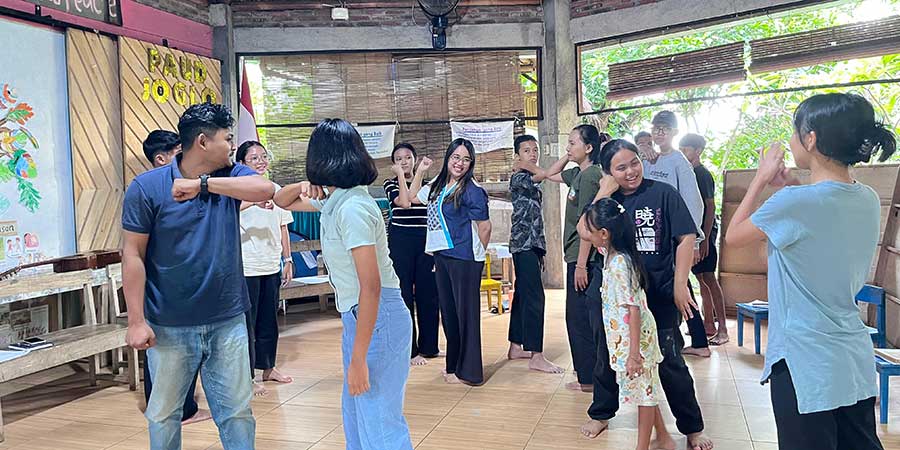
Light and Lively Back to Back with church youth
Power of Goodness (PoG) activities have become increasingly recognized by the wider community of groups from diverse backgrounds.This has become a valuable learning space for me, especially in my studies in the Master’s Program in Psychology. In the academic process, I have learned concepts related to human behavior that directly enrich and support my facilitation in the community.
Combining the Alternatives to Violence Project (AVP) approach with the psychological knowledge gained through my studies has helped me better understand how individuals think, feel, and behave in different situations. It has also made me more attentive to participants’ emotional needs, individual differences, and ways of responding during activities. For example, I have become more aware of how to create a supportive environment, listen to participants’ concerns, and adapt follow-up activities to their specific needs. This combination has strengthened my ability to approach each participant with greater understanding and sensitivity. As Carl Rogers emphasized, empathetic understanding of individuals is key to creating a meaningful and transformative learning process.
Wiwit, a psychologist, and I began experimenting with incorporating psychological materials and practices into PoG activities. This practice has helped us integrate our book learning with real life. In the process, we were challenged to connect PoG values with the themes requested by the community.
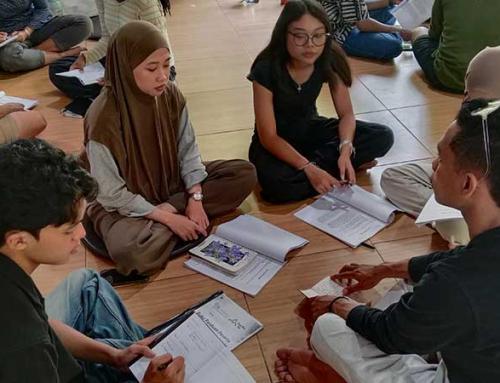
One such experience took place in a church setting, where the teenage participants asked us to conduct a public speaking workshop. In implementing this, we used the “Power of Goodness” training as our response, integrating several elements from AVP Basic, such as being a listener and a speaker, the concentric circles, and the practice of “cultivating the good in one another.” This approach focuses on speaking skills as well as the development of self-awareness and interpersonal relationships.
We used PoG stories as materials for reflection and large group discussions. This provided a new experience for participants to understand real-life situations that emphasize finding nonviolent solutions and doing good even in difficult circumstances. This aligns with the view of Albert Bandura, who emphasized that learning occurs through observation and reflection on experiences, both direct and indirect.
In this “Power of Goodness” activity, we asked participants to write down the obstacles they face when speaking in public. From a psychological perspective, this step serves as an initial screening to identify participants’ needs and challenges. Lack of self-confidence, fear of making mistakes, shyness, and reluctance to speak in front of older people were among the obstacles mentioned.
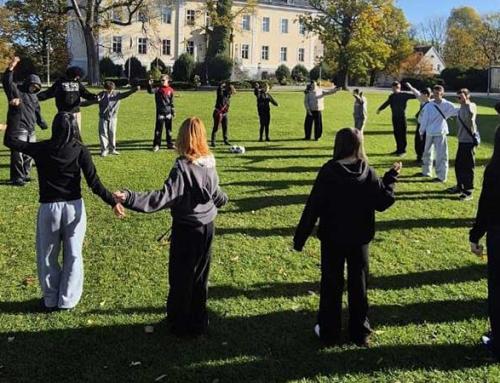
The session began with an affirmation activity, in which participants were encouraged to recognize their positive qualities and appreciate the goodness within themselves. This was followed by an affirmation name activity, designed to help them build self-confidence by expressing positive words about themselves. After these activities, we introduced the Concentric Circles activity, which provided an opportunity for participants to practice speaking with people around them, including those they had rarely or never interacted with before. Through this process, participants were encouraged to develop courage, strengthen their confidence, and improve their interpersonal communication skills. Using psychological approaches in Power of Goodness activities integrates theory and practice to strengthen the quality of facilitation.
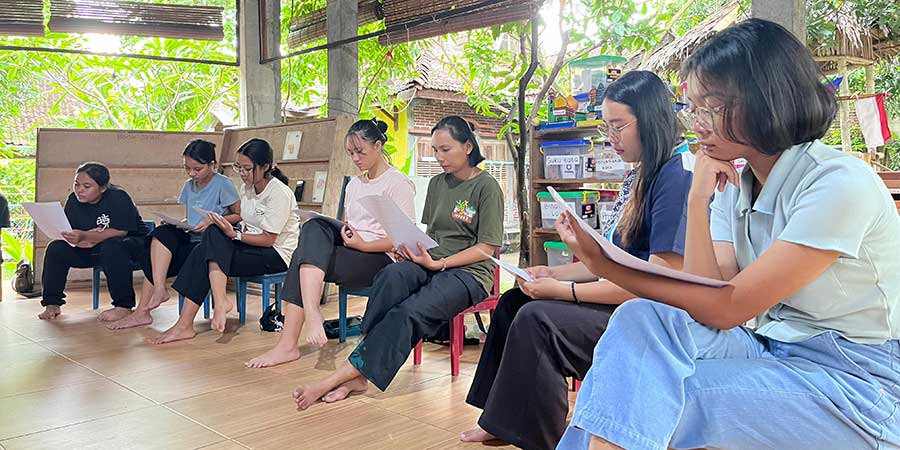
Reading the story “The Price of Peace”