African Great Lakes
Food Security through Conservation Agriculture (FSCA) Gicumbi
Monthly Report for April, 2022
Monthly Report for April, 2022
By Theophile Uwiringiyamana

The AGLI Coordinator, Supervisor and Assistant Project Coordinator visited FFS Groups both to empower the groups and to assess the progress of our Food Security through Conservation Agriculture project. They visited maize , Irish potatoes and the nursery beds of the vegetables that are near the FFS plots and were able to converse with some of the FFS members.
The Transformational Leadership Center (TLC) continues to battle food insecurity issues in Rwanda, especially in Gicumbi District. The activities are ongoing and being implemented within two sectors of Gicumbi.
Today the Farmer Field School (FFS) approach is being used by many private and government organizations both locally and internationally because it provides the easiest way to spread effective techniques in the agriculture sector. FFS has been effective in involving adult farmers in small research projects that bring solutions to the agricultural problems they are currently facing in their fields and with their livestock.
In FSCA phase 3 (Food Security through Conservation Agriculture 3), TLC has established two FFS groups. One is called Girumurava and is located in Nyamiyaga Sector, Kiziba Cell at Rwingwe Village. Another FFS group is called Abishyizehamwe and located in Rukomo Sector, Munyinya Cell at Munyinya Village. Girumurava FFS group is composed of 30 Farmer Motivators who have been selected due to their Conservation Agriculture (CA) activities, and they have begun to train other farmers. Abishyizehamwe FFS group is also composed of 30 Farmer Motivators who have been selected due to their recognized CA activities.
Within both Farmer Field School groups, there are some farmers from our previous FFS groups but also some previous spontaneous adopters, and all are currently being trained on CA Component in order to improve their conservation agriculture skills. Both groups are currently doing Saving for Life (SFL) and were given the SFL kits to help them save in effective and appropriate ways. Very soon they will start giving out some loans and we hope that they will pay Mutuel de Santé on time because they are collecting money. Both groups conducted many activities in April, such as weeding, removing dead crops on the plots, and attending planned lessons on AgroEcoSystem Analysis (AESA), CA principles, and others.
However, this season climate change has affected the crops and disease has attacked the crops. We have hope for getting a yield but the yield will be low compared to the previous seasons because of these issues.
In April the FFS groups did many activities and took care of vegetable gardens. In this month we discovered unusual diseases in maize at Nyamiyaga sector; the variety we planted there was not a disease resistant variety. The Irish potatoes were attacked by bacteria and we have removed at least 10 percent of the crops on the plot. This will lead automatically to low production at the end of this season.
Many locations in Gicumbi District including Byumba, Rukomo and Nyamiyaga faced the challenge of heavy rain that destroyed the crops; this storm was actually expected to turn to snow, and it did snow in Kigali, but it was the heavy rains that destroyed the crops in Gicumbi. This will also reduce the crop production as we conclude this season in which we have faced too many unexpected disasters that will lead farmers to reap less yield while the price of agro inputs have increased drastically.
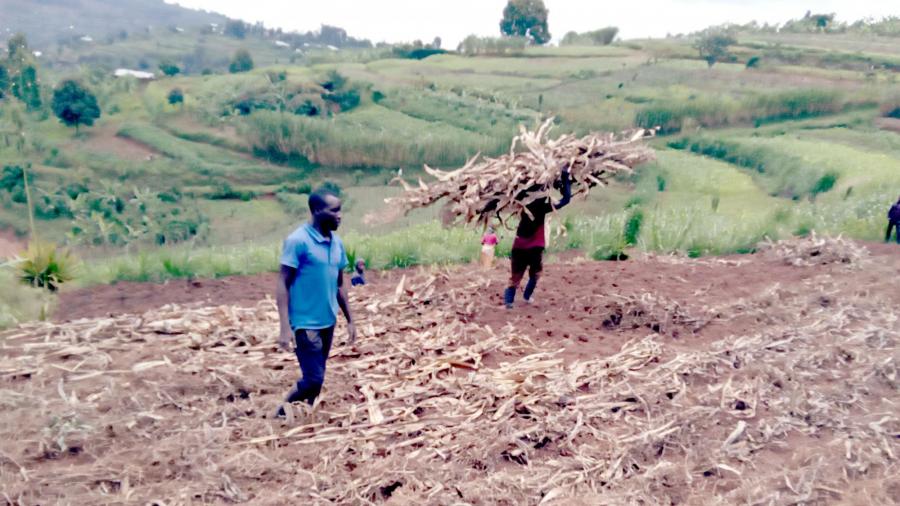
Both Abishyizehamwe and Girumurava Farmer Field School groups have started to make savings and were given Saving For Life kits for doing savings action.
The individual farmers are currently practicing CA on large areas of land; some have consolidated their lands in order to expand CA to large scale. For research purposes, they have tried to plant the same crops, although there were challenges for planting on different dates. Land Consolidation has been implemented in Rukomo Sector while in Nyamiyaga Sector, we have farmers who were already doing CA on large areas, especially the spontaneous adopters.
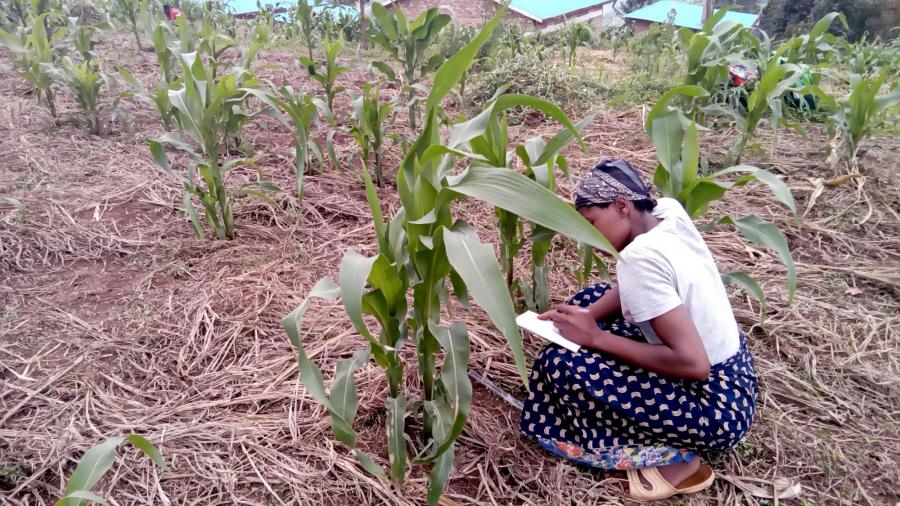
In April, FFS Groups enjoyed lessons like the refresher on Agro Ecosystem Analysis (AESA). They recognized that making observations and writing down some notes gives information about the crops and makes problem situations easier to understand. Knowing the pests we have met on the fields and the diseases that have attacked the crops has led the farmers to find the solutions to such problems by using methods they have learned about.