African Great Lakes
Empowering Children through Peer Mediation for Sustainable Conflict Resolution
By Jean d’Amour
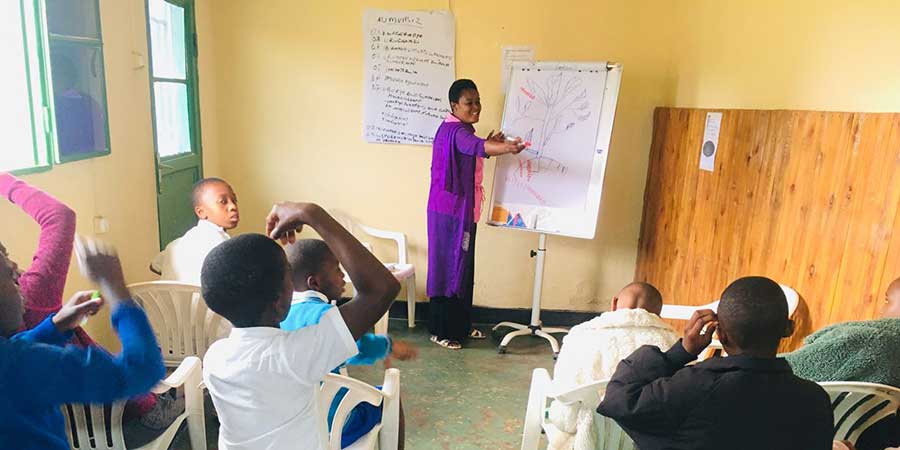
Facilitator Odette, sharing with participants the tree of Peace and tree of Violence
TRANSFORMATIONAL LEADERSHIP CENTER (TLC)
Children’s Peace Library
Empowering Children through Peer Mediation for Sustainable Conflict Resolution
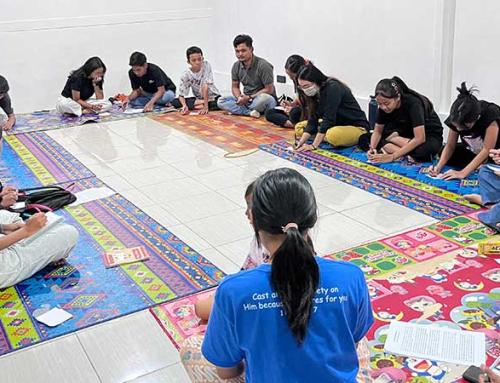
In March 2025, TLC conducted a peer mediation workshop at Gicumbi Children’s Peace Library. That session aimed to teach children how to resolve conflicts, promote peaceful communication, and encourage positive relationships among peers. The training was designed to help young people become active problem-solvers and mediators within their communities.
A total of 23 children from three neighboring schools with 10 to 12-year-olds participated, where they learned conflict resolution strategies that they can apply in their families, schools, and communities. The participants expressed their appreciation for the knowledge gained, emphasizing how it would contribute to fostering harmonious relationships. The facilitators were pleased to see how quickly the children understood and adapted the practices they learned during the peer mediation workshop. It is truly encouraging to witness them actively using these skills to resolve conflicts peacefully among their peers.
Participant Testimonials:
Mukiza Eric, 11 years old: “I have learned how to mediate conflicts between people. Now I am ready to help my peers resolve conflicts and bring peace to my community.”
Iradukunda Belancille, 12 years old: “I liked learning about anger and how to deal with different personalities, especially when someone is angry, and how to use I-messages to maintain harmony.”
Ishimwe Confiance, 10 years old: “I now know how to avoid conflicts and help others mediate peacefully. I understand that unresolved conflicts can have serious consequences.”
Dukuzimana Elizabeth, 12 years old: “I learned how to prevent conflicts and promote peace, especially understanding causes like stealing and selfishness.”Manzi Iradukunda Yves, 11 years old: “This training taught me to mediate conflicts among my peers and understand the mediator’s role.”
Iranzi Patience, 10 years old: “I learned the stages of conflict and their consequences. Now, I can mediate conflicts effectively and help my community.”
For those three days, the students shared meals, nourishing their bodies and deepening their sense of community. These shared moments created a relaxed, inclusive atmosphere where students from different backgrounds connected, built trust, and opened up to one another. This sense of togetherness helped reinforce the values of empathy, understanding and cooperation.
Challenges and Recommendations:
Limited Space: The main challenge identified was the small size of the workshop hall; the current space can accommodate only a limited number of children.
There is a strong desire from schools and communities for more children to attend these valuable sessions because the schools recognize the importance of peer mediation workshops

Conflict resolution Model
Workshop Agenda:
Day 1:
· Opening: Welcome, prayer, introductions, and setting ground rules.
· Philosophy and Objectives of Peer Mediation: Introduction to mediation concepts and their importance.
· Understanding Conflict: Causes of conflict, characteristics of anger, and anger’s role in conflict.
· Group Discussion: Exploring the nature of conflict and its effects.
Day 2:
· Conflict Escalation and Violence: How conflicts escalate and lead to violence.
· Conflict Resolution Techniques: Introduction to the “I” and “You” messages and mediation strategies.
· The Tree of Violence and Tree of Peace concepts
· Role of a Mediator: Characteristics of an effective mediator and their role in resolving conflicts.
· Evaluation and Closing: Reflection on lessons learned.
Day 3:
· Revision and Practice: Review of the previous days’ content, followed by role-playing mediation scenarios.
· Modeling Mediation Practice: Facilitators demonstrated mediation techniques.
· Group Mediation Practice: Children practiced mediating conflicts within groups.